
Specialization in
Design for social innovation
Modalidad Escolarizada – Av. Constituyentes 455, Col. América, CDMX
Closing date: August 20, 2027
Duration: 3 semesters
Schedule: Mondays and Wednesdays from 6pm to 10pm
On-site and online classes
+2 on-site workshops in CDMX
Modalidad Escolarizada – Av. Constituyentes 455, Col. América, CDMX
Start date: August 31, 2026
Closing date: August 20, 2027
Duration: 3 semesters
Schedule: Mondays and Wednesdays from 6pm to 10pm
On-site and online classes
+2 on-site workshops in CDMX
Forma parte de nuestra #Comunidad Creativa
The Specialty in Design for Social Innovation is a unique program in Latin America where you will use design tools for the development of projects with social and environmental impact. Focused on action-research, it integrates methodologies that allow you to detect opportunities, articulate actors, facilitate collaborative processes and apply knowledge in pilots that respond to real contexts. Aimed at professionals in business, government or independent, seeking to design solutions hand in hand with colleagues and renowned local and international teachers.
- Action-research methodology: Allows us to detect challenges and opportunities in order to design responses focused on people and the environment.
- Integration to DESIS Network: Access to the global network of social innovation and sustainability laboratories.
- AI application: Use of artificial intelligence tools to support research, exploration and analysis of information, as well as data visualization.
- Specialized and diverse faculty: National and international experts in design methodologies applied to social innovation.
- Complementary experiences: Conferences, workshops, visits and networking.
Forma parte de nuestra #Comunidad Creativa
Curriculum
Who is it aimed at?
- People from diverse backgrounds interested in learning to design and manage social innovation projects, as well as those who already have experience and wish to strengthen their tools. It requires openness to apply methodologies, commitment to collaborative work, monitoring and self-management of projects. It is necessary to have basic knowledge of digital platforms and an advanced level of English.
What will you be able to work on?
- Graduates will be able to design and manage innovative solutions with a socially responsible approach, using systems thinking tools and methodologies focused on people and the environment.
- They will have the ability to facilitate collective processes and promote collaboration in diverse contexts.
- They will be able to work in social organizations, institutions, NGOs, companies and agencies, in roles that demand the design and management of innovative solutions that consider people and the environment.
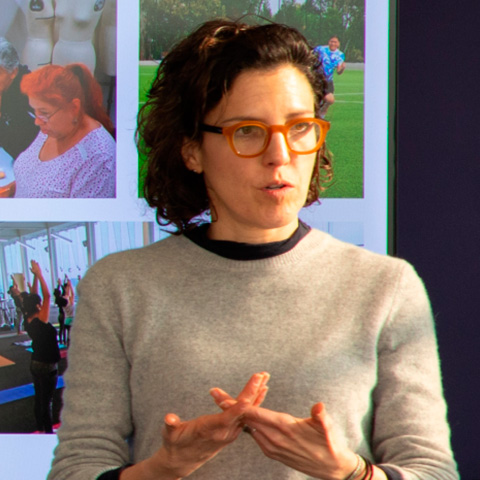
 Paulina Cornejo – Director
Art historian and Master in CSR Sustainability from the University of Barcelona and Master in Design Studies from CENTRO. She directs CENTRO’s Social Design Hub, a transversal area that promotes design focused on context, people and sustainability. Researcher, teacher and consultant for projects with social impact.
Teachers
 Jorge Camacho
Communications specialist, Master in Cyberculture, Doctor in Cultural Studies. Strategic designer and professional in futures studies. Collaborates as an associate researcher at the Institute for the Future. Directs the Master’s in Design: Methods and Explorations at CENTRO. Co-founder of the UNESCO Chair on Design Methods for Democratic Access to Future Imagination. Co-founder of Diagonal Estudio.
D. in philosophy from RMIT University Melbourne. She has an outstanding track record in research, teaching and implementation of communication strategies and design processes for social innovation in different fields. Creator of the first Master’s program in Design for Social Innovation at SVA NY.
Master in Social Development from University College London. She founded Holacode and has ventured into social entrepreneurship. In 2019 MIT included her in the list of 35 innovators under 35 and she was selected by Cartier among the best social entrepreneurs in the world. In 2018 El Economista named her the Voice of the Future of Mexico and IFC added her to the 50 women entrepreneurs who changed Latin America.
D. in transdisciplinary studies of culture and communication, Master in social anthropology. Co-Editor-in-Chief of CENTRO’s magazine Economía Creativa. Columnist, columnist, author of 4 books. Regional Editor for LATAM of the Journal of Future Studies (Tamkang University). Co-director of the UNESCO Chair in Design Methods for Democratic Access to the Imagination of the Future.
Master in design studies and industrial designer. Consultant and workshop leader in creative thinking, co-creation tools, design thinking, design sprints and problem solving. He collaborates with companies and educational institutions designing experiences and facilitating workshops on creative thinking, design methods and creative processes for complex problem solving.
Collaborations
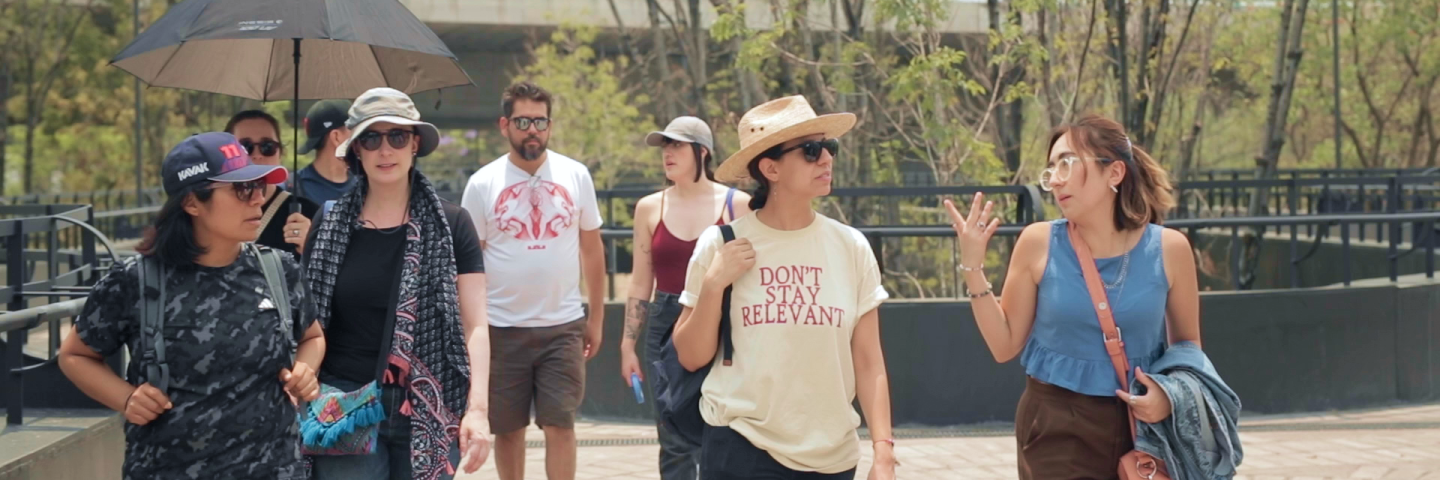
This program gives you the opportunity to interact with invited experts, as well as to apply knowledge and tools to the co-design of solutions with partners and organizations with which we collaborate.
What does Cheryl Heller say
about the program?
What do our customers think?
students?
Frequently asked questions
and admission process
for foreigners
Why CENTRO?
- Connection with an international network of experts.
- Excellence Boosting Program: study subjects from other graduate programs free of charge to complement your knowledge in other areas of interest
. - Collaborations with CENTRO's Creative Economy Research Center (CIEC), which disseminates scientific content and publishes the academic journal Economía Creativa.
- Professional collaborations with CENTRO Estudio, an area that links the graduate community with the industry in real projects.
Why CENTRO?
- Participation in CENTRO Conecta, a meeting
to connect with companies looking for creative talents. - Campus with 17 workshops of industrial design, textile and fashion, technology, screen printing, among others; 4 projection rooms; 4 computer labs, 1 photography and 1 lighting lab; 2 film and television forums; 13 editing islands; 3 audio booths; 1 ABB robotic arm; 1 Digital Maker Lab; the largest Motion Capture system in Latin America with 24 infrared cameras; and 1 art gallery.
Why CENTRO?
- Connection with an international network of experts.
- Excellence Boosting Program: study subjects from other graduate programs at no cost to complement your knowledge in other areas of interest.
- Collaborations with CENTRO's Creative Economy Research Center (CIEC), which disseminates scientific content and publishes the academic journal Economía Creativa.
- Professional collaborations with CENTRO Estudio, an area that links the graduate community with the industry in real projects.
- Participation in CENTRO Conecta, a networking event with companies looking for creative talent.
- Campus with 17 workshops of industrial design, textile and fashion, technology, screen printing, among others; 4 projection rooms; 4 computer labs, 1 photography and 1 lighting lab; 2 film and television forums; 13 editing islands; 3 audio booths; 1 ABB robotic arm; 1 Digital Maker Lab; the largest Motion Capture system in Latin America with 24 infrared cameras; and 1 art gallery.


Frequently Asked Questions
1. Do you have scholarships and financing?
CENTRO Scholarship: you can apply once you have your admission letter. A socio-economic study is conducted (with cost) and an external company evaluates the need for financial support. With this information the scholarship committee awards the percentage. The decision is final.
CENTRO Graduate Scholarship: 30% for graduates of both undergraduate and graduate programs.
Financiamiento: trabajamos con la empresa Laudex para el financiamiento de los programas. Ellos realizan un estudio de riesgo y otorgan el porcentaje de apoyo. Laudex Advisor Data: Linda Granados : 55 7672 2250 : linda.granados@laudex.mx
2. Are there benefits for prompt payment?
10% benefit on your first tuition payment if you register before April 20 for August graduate programs and October 20 for January graduate programs.
6% on your first tuition or full semester/quarter if you enroll before June 15 for August graduate programs and December 15 for January graduate programs.
3. Can I enroll without a bachelor's degree?
It is an essential requirement of the SEP to have a bachelor’s degree in order to pursue a postgraduate program. If you are still in the process of obtaining your degree, you can enroll by presenting a certificate from your university indicating that you have completed 100% of your credits satisfactorily and that your degree is in process.
4. Can I obtain my degree through a CENTRO Graduate Program?
Yes, you can do so, by means of a letter from your university indicating that you have successfully completed 100% of your undergraduate credits and authorizing this degree process.
5. Why should I have a good level of English?
6. What are the requirements to take a Postgraduate course?
To begin your admission process you need: Bachelor’s degree (if you are in the process of graduating you have the first semester to present your degree), letter of motivation, admission form with your data, Curriculum Vitae, interview with the program management for evaluation and acceptance, preferably professional experience, good level of English (applies to some programs).
In some graduate programs you will be asked for specific requirements related to the knowledge of software programs or to have a portfolio. Your advisor will inform you of these specifications.
To begin your enrollment process you need to present the following documents: Letter of Acceptance, Birth Certificate, Bachelor’s Degree Certificate, Bachelor’s Degree, CURP and Professional ID.
What is the admission process like?
Once you meet all the requirements mentioned in the previous points, you must pass an interview with the management or coordination of the program of your interest. If you are admitted to the program, we will give you your letter of acceptance and you can start the enrollment process by paying the first tuition fee and sending the required documentation. At this point you can start, if necessary, the scholarship application process. Once you have completed the admission forms, made the payment and sent the documentation, you will be officially enrolled in the postgraduate program.
How is the admission process for foreigners?
You can choose to take the program and obtain a degree from CENTRO or revalidate your studies to obtain a degree from the SEP.
Consult the frequently asked questions for foreigners here
9. Can I take courses from other graduate programs?
CENTRO has developed the “Impulse to Excellence” program, which allows graduate students to take courses from other programs to enrich their education at no additional cost.
Specialties: 2 subjects per semester/quarter (4 in total of the program).
Master’s Degree: 2 subjects per semester/quarter (6 in total for the program).
To obtain this benefit you must meet certain academic prerequisites and have no financial debts.
What is the difference between a Specialty and a Master's Degree?
A Specialty is a postgraduate degree to deepen in a specific area of knowledge and develop skills for a better job performance. Upon completion, you obtain a Specialist academic diploma awarded by the SEP. The average duration is one year.
A Master’s degree is the last stage of formal education, a postgraduate program that provides academic, theoretical and practical training superior to that of a specialty. It requires analytical and interpretative skills to elaborate concepts and develop arguments. Upon completion, you obtain a Master’s degree awarded by the SEP. The average duration is 18 months or between 400 and 500 hours of training.