
Specialization in
Design and innovation
for food
Modalidad Mixta – Av. Constituyentes 455, Col. América, CDMX
End Date | August 20, 2028
Duration | 3 four-month terms
Schedule | Tuesdays and Thursdays from 6:00 p.m. to 10:00 p.m.
In-person classes with online technological support
+5 workshops and visits with international specialists in Mexico City
Extracurricular activities: 5 Saturdays and one Sunday per year
Modalidad Mixta – Av. Constituyentes 455, Col. América, CDMX
End Date | August 20, 2028
Duration | 3 four-month terms
Schedule | Tuesdays and Thursdays from 6:00 p.m. to 10:00 p.m.
In-person classes with online technological support
+5 workshops and visits with international specialists in Mexico City
Extracurricular activities: 5 Saturdays and one Sunday per year
Forma parte de nuestra #Comunidad Creativa
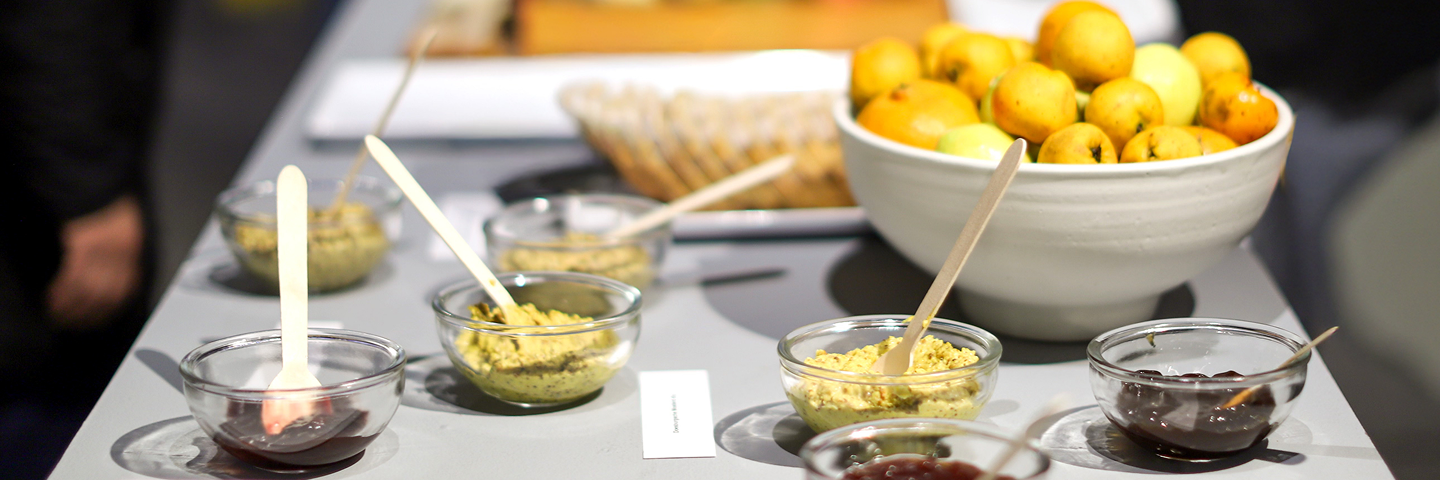
The Specialty in Design and Innovation for Food is the first postgraduate program in Latin America dedicated to the professionalization of the design of products, spaces, experiences and services of the food system. Using a project-based learning methodology, the program focuses on sustainability, technology and innovation and works in close collaboration with leading companies and organizations. Our faculty members are recognized agents of change in food, nutrition, research, product development, marketing and Food Design in Mexico.
- Pioneer program: First postgraduate program in Latin America focused on the design of products, spaces, businesses and services of the food system.
- Innovation and sustainability: Use of technological tools to create solutions with social, environmental and economic impact.
- AI for food design: Processing and analysis of gastronomic data and information to design products, spaces and services.
- Transdisciplinary vision: Integration of design with different areas to address the food system in a comprehensive manner.
- Industry links: Collaborations with national and international firms in Food Design and the food sector.
Forma parte de nuestra #Comunidad Creativa
Curriculum
Who is it intended for?
- Professionals in design, gastronomy, culinary arts, product development or related areas, with an interest in the intersection of design and food. Basic knowledge of food trends and the culture of design applied to food is required.
What kind of jobs can you do?
- Graduates will gain skills for the development and design of functional and sustainable products, experiences and services for the different sectors of the food system with a trandisciplinary approach.
- They may work as food product designers in research and development departments, innovation chefs, food product development coordinators, culinary design consultants or food experience designers.
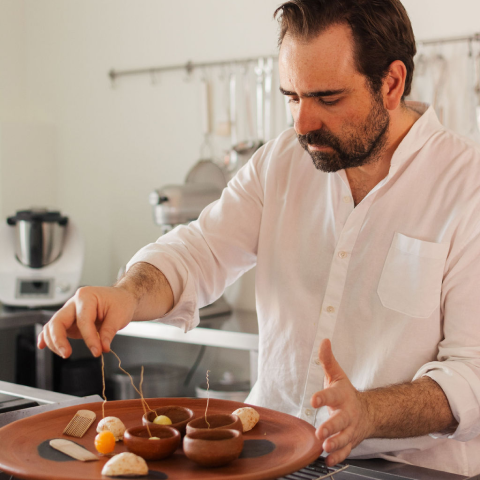
 José Antonio Sada : Director
Architect by the Universidad Iberoamericana, with master’s degrees in Design Studies by CENTRO and in Food Design and Innovation by the Scuola Politecnica di Design. He is the founder of Estudio Sada, where he manages Mesatemporal, an initiative in Oaxaca that researches and reflects on food and gastronomy through design, collaborating with clients such as La Costeña, BBVA, Art Jewelry Forum, Tekio and the Museo de Arte de Zapopan, among others.
Teachers
 Rafael Medina
He studied under the tutelage of André Gürtler of the University of Basel in Switzerland and Paula Scher of Pentagram New York. He was Creative Director of Interbrand Mexico, developing projects with clients such as Televisa, ING, Banreservas, La Europea, Sigma, Oxxo, Walmart, Grupo Herdez, Banco Uno, Basham, Mexicana de Aviación, among others. He is currently partner and director of Brandia, an agency specialized in the strategic design of brands capable of generating positive changes.
He holds a PhD in Food Process Engineering (Wageningen University), MSc in Food Technology (Wageningen University) and BSc in Food Chemistry (UNAM). She has driven food innovation from sensory science and consumer studies in the flavor and functional ingredients industry. She is a researcher and lecturer at the Faculty of Chemistry at UNAM. Her research revolves around sustainable diets with a focus on protein digestion.
Editor, producer and journalist specialized in gastronomy, travel and culture with more than 15 years of experience. She was editorial director of Food & Wine magazine, food critic for Chilango and Travel & Leisure magazines and contributor to NYTimes, Univisión, Netflix, El País, Travesías, Milenio, Expansión and Life & Style. She has edited books such as Mmm… Menudo Menú Mexicano and 102 Mexican wines by Robb Report Mexico magazine and has been a judge for the TV show The Final Table.
Architect trained at the Universidad Iberoamericana, Harvard GSD and IED Madrid. Her work explores the relationship between architecture and nature, with research in food sovereignty. From her studio DOMA she develops projects that integrate ecology and public space. He has been a juror in competitions, lecturer at Harvard GSD and collaborated with various institutions. His works, such as LIMBO and TEOCINTLE, have received grants and have been exhibited internationally.
She holds a degree in Nutrition and a Master’s degree in Human Development and Food Security from the Università degli Studi Roma Tre. She has worked as an international consultant at the FAO of the United Nations on indigenous food systems and empowerment of indigenous women. She is currently a consultant on sustainable food systems, sustainable food and food security.
Master of Science in Public Health and Nutrition, she has 20 years of experience connecting the worlds of science and business. She has generated health and nutrition strategies for business plans, branding and communication, as well as public health and food systems issues. Her negotiation and persuasion skills have helped her generate external alliances with public and private entities on health and nutrition issues.
Frequently Asked Questions
and the admissions process
for international students
Why CENTRO?
- Connection to an international network of experts.
- Program to Promote Excellence: Take courses from other graduate programs at no cost to expand your knowledge in other areas
of interest. - Collaborations with CENTRO's Center for Research on the Creative Economy (CIEC), which disseminates scientific content and publishes the academic journal *Economía Creativa*.
- Professional collaborations with CENTRO Estudio, a program that connects the graduate student community with industry on real-world projects.
Why CENTRO?
- Participation in CENTRO Conecta, a "
" event designed to connect with companies seeking creative talent. - A campus with 17 workshops for industrial design, textiles and fashion, technology, screen printing, and more; 4 screening rooms; 4 computer labs, 1 photography lab, and 1 lighting lab; 2 film and television forums; 13 editing stations; 3 audio booths; 1 ABB robotic arm; 1 Digital Maker Lab; the largest motion capture system in Latin America with 24 infrared cameras; and 1 art gallery.
Why CENTRO?
- Connection to an international network of experts.
- Program to Promote Excellence: Take courses from other graduate programs at no cost to expand your knowledge in other areas of interest.
- Collaborations with CENTRO's Center for Research on the Creative Economy (CIEC), which disseminates scientific content and publishes the academic journal *Economía Creativa*.
- Professional collaborations with CENTRO Estudio, a program that connects the graduate student community with industry on real-world projects.
- Participation in CENTRO Conecta, a networking event with companies seeking creative talent.
- A campus with 17 workshops for industrial design, textiles and fashion, technology, screen printing, and more; 4 screening rooms; 4 computer labs, 1 photography lab, and 1 lighting lab; 2 film and television forums; 13 editing stations; 3 audio booths; 1 ABB robotic arm; 1 Digital Maker Lab; the largest motion capture system in Latin America with 24 infrared cameras; and 1 art gallery.


Frequently Asked Questions
1. Do you offer scholarships and financial aid?
CENTRO Scholarship: You can apply once you have received your admission letter. A socioeconomic assessment (for a fee) is conducted, and an external company evaluates your need for financial aid. Based on that information, the scholarship committee determines the percentage. The decision is final.
CENTRO Alumni Scholarship: 30% for graduates of both undergraduate and graduate programs.
Funding: We work with Laudex to secure funding for the programs. They conduct a risk assessment and determine the percentage of funding to be provided. Laudex Advisor Contact Information: Linda Granados | 55 7672 2250 | linda.granados@laudex.mx
2. Are there any early payment benefits?
Get 10% off your first tuition payment if you enroll by April 20 for the August graduate programs and by October 20 for the January graduate programs.
6% off your first tuition payment or the full semester/quadrimester fee if you enroll by June 15 for the August graduate programs and by December 15 for the January graduate programs.
3. Can I enroll without a bachelor's degree?
It is a mandatory requirement of the SEP to hold a bachelor’s degree in order to enroll in a graduate program. If you are still in the process of obtaining your degree, you may enroll by submitting a certificate from your university stating that you have successfully completed 100% of your course credits and that your degree is in process.
4. Can I earn a degree through a CENTRO graduate program?
Yes, you can do so by submitting a letter from your university stating that you have successfully completed 100% of your bachelor’s degree credits and authorizing this degree conferral process.
5. Why do I need to have a good command of English?
6. What are the requirements for enrolling in a graduate program?
To begin the admissions process, you will need: A bachelor’s degree (if you are still working toward your degree, you have the first semester to submit your diploma), a statement of purpose, a completed admission form with your information, a resume, an interview with the program directors for evaluation and acceptance, preferably professional experience, and a good command of English (required for some programs).
Some graduate programs will have specific requirements related to knowledge of software programs or having a portfolio. Your advisor will inform you of these requirements.
To begin the registration process, you must submit the following documents: Letter of Acceptance, Birth Certificate, Bachelor’s Degree Certificate, Bachelor’s Degree Diploma, CURP, and Professional License.
7. What is the admissions process like?
Once you have met all the requirements listed in the previous points, you must undergo an interview with the administration or program coordinators of the program you are interested in. If you are admitted to the program, we will provide you with your acceptance letter, and you can begin the enrollment process by paying the first tuition installment and submitting the required documentation. At this point, you can begin the scholarship application process, if necessary. Once you have completed the admission forms, made the payment, and submitted the required documentation, you will be officially enrolled in the graduate program.
8. What is the admissions process for international students?
You can choose to enroll in the program and earn a degree from CENTRO, or have your studies recognized to obtain a degree from the SEP.
Check out the FAQs for foreigners here
9. Can I take courses from other graduate programs?
CENTRO has developed the “Promoting Excellence” program, which allows graduate students to take courses from other programs to enrich their education at no additional cost.
Specializations: 2 courses per semester/quadrimester (4 in total for the program).
Master’s Programs: 2 courses per semester/quadrimester (6 in total for the program).
To be eligible for this benefit, you must meet certain academic prerequisites and have no outstanding financial obligations.
10. What is the difference between a specialization and a master's degree?
A Specialization is a graduate program designed to provide in-depth study in a specific area of knowledge and to develop skills for better job performance. Upon completion, you will receive an academic diploma as a Specialist awarded by the SEP. The average duration is one year.
A master’s degree is the final stage of formal education—a graduate program that provides academic, theoretical, and practical training superior to that of a specialization. It requires analytical and interpretive skills to formulate concepts and develop arguments. Upon completion, you will receive a Master’s degree awarded by the SEP. The average duration is 18 months or between 400 and 500 hours of instruction.