
Specialization in
Event design
Modalidad Escolarizada – Av. Constituyentes 455, Col. América, CDMX
Start date: January 26, 2026
Closing date: December 8, 2026
Duration: 2 semesters
Schedule: Mondays and Wednesdays from 6pm to 10pm
Face-to-face classes
+ 1 bootcamp in Mexico City
and an event held at the end of the semester
RVOE SEP Federal No. 20261335 (March 24, 2026)
Modalidad Escolarizada – Av. Constituyentes 455, Col. América, CDMX
Start date: January 26, 2026
Closing date: December 8, 2026
Duration: 2 semesters
Schedule: Mondays and Wednesdays from 6pm to 10pm
Face-to-face classes
+ 1 bootcamp in Mexico City
and an event held at the end of the semester
Forma parte de nuestra #Comunidad Creativa
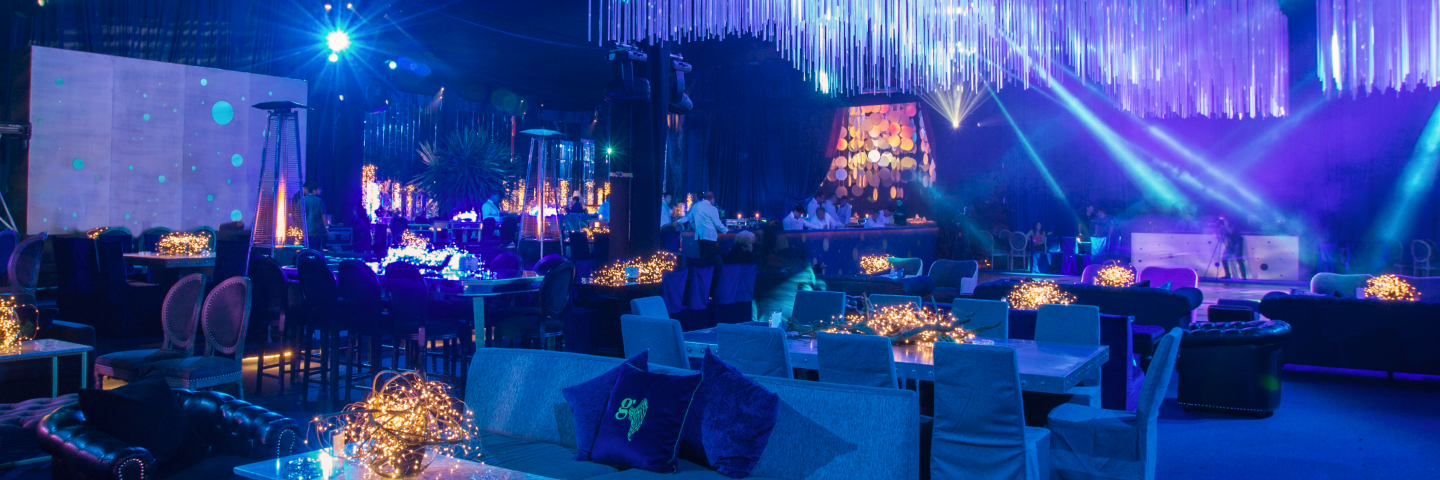
The Event Design Specialty trains creative and strategic professionals capable of transforming ideas into memorable experiences. The program combines design, logistics, technology and communication, providing students with the tools to plan, produce and evaluate innovative events with social and cultural impact. With a focus on sustainability, inclusion and responsibility, the program integrates practical workshops, real projects and the guidance of recognized experts in planning, scenography, lighting, ambience and production.
- Pioneer program in Mexico: First plan focused on event design at the university level.
- Multidisciplinary training: Integrates creativity, management, production and communication in interdisciplinary projects.
- AI in event design: Uses preview software and AI tools to develop and conceptualize projects.
- Faculty of excellence: Professors recognized in the national and international industry, active in major festivals, design fairs, fashion shows, shows and corporate and cultural events.
- International projection: Incorporates international collaborations with an approach adapted to the Mexican context.
Forma parte de nuestra #Comunidad Creativa
Curriculum
Who is it aimed at?
- Professionals with a background or affinity for design, architecture, communication, art, gastronomy or production, with an interest in design as a tool to create memorable experiences.
- Creative, curious and sensitive to the environment, with a developed aesthetic vision and a natural ability to organize, coordinate and materialize ideas.
- A profile that seeks to combine creativity with strategy, sensitivity with technique, and emotion with functionality, orienting their professional practice towards innovation, sustainability and aesthetic excellence.
What will you be able to work on?
Graduates will be able to work as designers and producers of social and signature events (wedding and social planners, banquet companies, hotels, event locations, lifestyle agencies), designers of culinary and gastronomic experiences (restaurants, food brands, food festivals, hospitality), designers and producers of music and entertainment events (concert production companies, festivals, entertainment brands, fairs, shows and immersive experiences).

Teachers

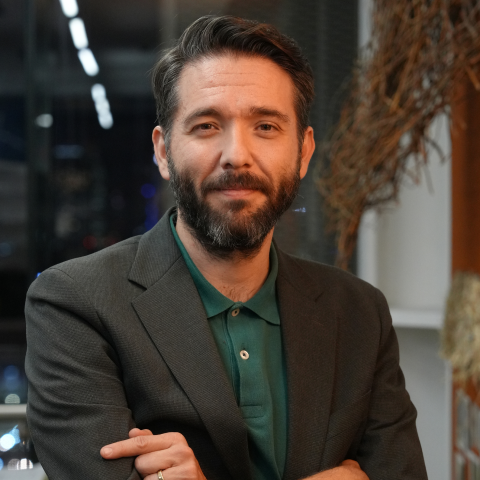
Designer with more than 27 years of experience, he specializes in the design of social and corporate events and ephemeral installations, creating unique experiences through multidisciplinary concepts and scenographies. Professor and consultant for brands such as Louis Vuitton, Dolce & Gabbana, Mont Blanc and ProMéxico, he has received multiple awards in Mexico and abroad.

Architect and founder of Arquitectura Floral, she is recognized for her avant-garde approach that fuses architecture, design and floral art. With over 20 years of experience, she specializes in transforming spaces through ephemeral installations for luxury brands, events and urban environments.
Frequently asked questions
and admission process
for foreigners
Why CENTRO?
- Connection with an international network of experts.
- Excellence Boosting Program: study subjects from other graduate programs free of charge to complement your knowledge in other areas of interest
. - Collaborations with CENTRO's Creative Economy Research Center (CIEC), which disseminates scientific content and publishes the academic journal Economía Creativa.
- Professional collaborations with CENTRO Estudio, an area that links the graduate community with the industry in real projects.
Why CENTRO?
- Participation in CENTRO Conecta, a meeting
to connect with companies looking for creative talents. - Campus with 17 workshops of industrial design, textile and fashion, technology, screen printing, among others; 4 projection rooms; 4 computer labs, 1 photography and 1 lighting lab; 2 film and television forums; 13 editing islands; 3 audio booths; 1 ABB robotic arm; 1 Digital Maker Lab; the largest Motion Capture system in Latin America with 24 infrared cameras; and 1 art gallery.
Why CENTRO?
- Connection with an international network of experts.
- Excellence Boosting Program: study subjects from other graduate programs at no cost to complement your knowledge in other areas of interest.
- Collaborations with CENTRO's Creative Economy Research Center (CIEC), which disseminates scientific content and publishes the academic journal Economía Creativa.
- Professional collaborations with CENTRO Estudio, an area that links the graduate community with the industry in real projects.
- Participation in CENTRO Conecta, a networking event with companies looking for creative talent.
- Campus with 17 workshops of industrial design, textile and fashion, technology, screen printing, among others; 4 projection rooms; 4 computer labs, 1 photography and 1 lighting lab; 2 film and television forums; 13 editing islands; 3 audio booths; 1 ABB robotic arm; 1 Digital Maker Lab; the largest Motion Capture system in Latin America with 24 infrared cameras; and 1 art gallery.


Frequently Asked Questions
1. Do you have scholarships and financing?
CENTRO Scholarship: you can apply once you have your admission letter. A socio-economic study is conducted (with cost) and an external company evaluates the need for financial support. With this information the scholarship committee awards the percentage. The decision is final.
CENTRO Graduate Scholarship: 30% for graduates of both undergraduate and graduate programs.
Financiamiento: trabajamos con la empresa Laudex para el financiamiento de los programas. Ellos realizan un estudio de riesgo y otorgan el porcentaje de apoyo. Laudex Advisor Data: Linda Granados : 55 7672 2250 : linda.granados@laudex.mx
2. Are there benefits for prompt payment?
10% benefit on your first tuition payment if you register before April 20 for August graduate programs and October 20 for January graduate programs.
6% on your first tuition or full semester/quarter if you enroll before June 15 for August graduate programs and December 15 for January graduate programs.
3. Can I enroll without a bachelor's degree?
It is an essential requirement of the SEP to have a bachelor’s degree in order to pursue a postgraduate program. If you are still in the process of obtaining your degree, you can enroll by presenting a certificate from your university indicating that you have completed 100% of your credits satisfactorily and that your degree is in process.
4. Can I obtain my degree through a CENTRO Graduate Program?
Yes, you can do so, by means of a letter from your university indicating that you have successfully completed 100% of your undergraduate credits and authorizing this degree process.
5. Why should I have a good level of English?
6. What are the requirements to take a Postgraduate course?
To begin your admission process you need: Bachelor’s degree (if you are in the process of graduating you have the first semester to present your degree), letter of motivation, admission form with your data, Curriculum Vitae, interview with the program management for evaluation and acceptance, preferably professional experience, good level of English (applies to some programs).
In some graduate programs you will be asked for specific requirements related to the knowledge of software programs or to have a portfolio. Your advisor will inform you of these specifications.
To begin your enrollment process you need to present the following documents: Letter of Acceptance, Birth Certificate, Bachelor’s Degree Certificate, Bachelor’s Degree, CURP and Professional ID.
What is the admission process like?
Once you meet all the requirements mentioned in the previous points, you must pass an interview with the management or coordination of the program of your interest. If you are admitted to the program, we will give you your letter of acceptance and you can start the enrollment process by paying the first tuition fee and sending the required documentation. At this point you can start, if necessary, the scholarship application process. Once you have completed the admission forms, made the payment and sent the documentation, you will be officially enrolled in the postgraduate program.
How is the admission process for foreigners?
You can choose to take the program and obtain a degree from CENTRO or revalidate your studies to obtain a degree from the SEP.
Consult the frequently asked questions for foreigners here
9. Can I take courses from other graduate programs?
CENTRO has developed the “Impulse to Excellence” program, which allows graduate students to take courses from other programs to enrich their education at no additional cost.
Specialties: 2 subjects per semester/quarter (4 in total of the program).
Master’s Degree: 2 subjects per semester/quarter (6 in total for the program).
To obtain this benefit you must meet certain academic prerequisites and have no financial debts.
What is the difference between a Specialty and a Master's Degree?
A Specialty is a postgraduate degree to deepen in a specific area of knowledge and develop skills for a better job performance. Upon completion, you obtain a Specialist academic diploma awarded by the SEP. The average duration is one year.
A Master’s degree is the last stage of formal education, a postgraduate program that provides academic, theoretical and practical training superior to that of a specialty. It requires analytical and interpretative skills to elaborate concepts and develop arguments. Upon completion, you obtain a Master’s degree awarded by the SEP. The average duration is 18 months or between 400 and 500 hours of training.