
Specialization in
Cinematographic photography
RVOE SEP Federal No. 20261334 (March 24, 2026)
Modalidad Escolarizada – Av. Constituyentes 455, Col. América, CDMX
Start date: September 2026
Duration: 3 four-month periods
Timetable: Thursdays 17 – 22h
Saturdays 10 – 15 h
Face-to-Face Classes
RVOE SEP Federal No. 20261334 (March 24, 2026)
Modalidad Escolarizada – Av. Constituyentes 455, Col. América, CDMX
Start date: September 2026
Duration: 3 four-month periods
Timetable: Thursdays 17 – 22h
Saturdays 10 – 15 h
Face-to-Face Classes
Forma parte de nuestra #Comunidad Creativa
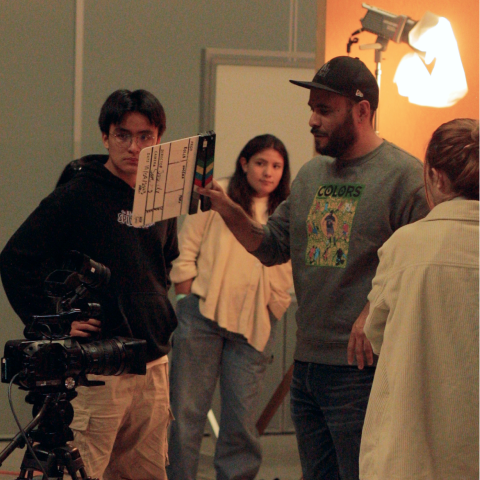
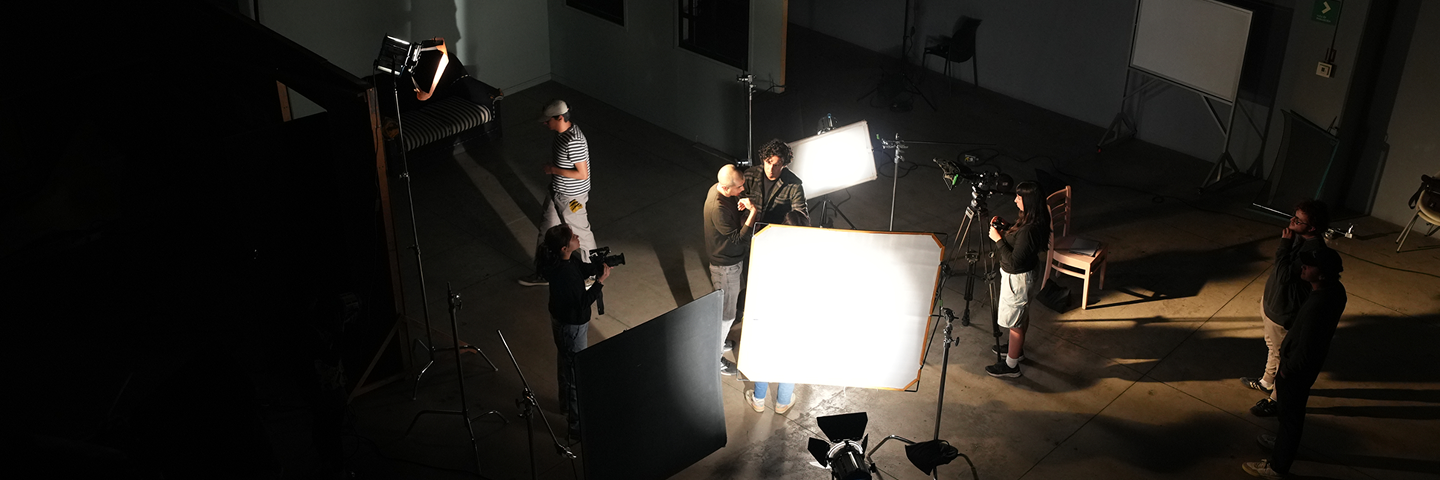
The Specialty in Cinematographic Photography is an intensive program that combines practice in analog and digital film with the mastery of lighting techniques, optics, laboratory development and post-production. Students explore cinematography as an artistic and authorial language, developing projects that integrate technical rigor, visual thinking and their own creative vision. The plan is designed for those who seek to deepen their knowledge of cinematography and expand their narrative possibilities in contemporary cinema and audiovisuals.
- ARRI Academy certification: use of ARRI Alexa 35 camera, lighting and optics from industry-leading brands.
- Teachers with global trajectory: learn from recognized experts in the national and international industry.
- Integral film training: Practices in 35, 16 and 8 millimeters material.
- 100% hands-on approach: which encourages artistic experimentation and mastery of technical tools.
- Professional network: Be part of an ecosystem where you will develop professional and labor links.
- Creation of a competitive demo reel: including fiction, documentary, experimental, analog and digital.
Forma parte de nuestra #Comunidad Creativa
Curriculum
Who is it aimed at?
- Graduates from careers such as film, communication, audiovisual media and related areas, as well as professionals with experience in the audiovisual field who wish to deepen their knowledge of cinematographic photography, strengthen their technical and creative training, and take the next step towards specialized roles in image direction.
What will you be able to work on?
- Graduates will be able to produce high quality cinematographic images, integrating technical and artistic approaches in analog and digital formats.
- They will be skilled in advanced photography, lighting and composition techniques. They will be able to collaborate in teams, direct photographic projects and build visual narratives in film and series.
- They may work as directors of photography or audiovisual production, cinematographers or film production coordinators.
 Marcelino Islas : Director
He has collaborated as director, producer, screenwriter and editor in commercial and personal film projects. His work has been selected and awarded in more than 50 meetings, including Venice, Tokyo, Rome, Morelia, Guadalajara, Munich, Cartagena, Chicago, Kerala and Havana. He has been a jury member for the Fiscal Stimulus for Investment Projects in National Film Production and Distribution (EFICINE).
Teachers


Frequently asked questions
and admission process
for foreigners
Why CENTRO?
- Connection with an international network of experts.
- Excellence Boosting Program: study subjects from other graduate programs free of charge to complement your knowledge in other areas of interest
. - Collaborations with CENTRO's Creative Economy Research Center (CIEC), which disseminates scientific content and publishes the academic journal Economía Creativa.
- Professional collaborations with CENTRO Estudio, an area that links the graduate community with the industry in real projects.
Why CENTRO?
- Participation in CENTRO Conecta, a meeting
to connect with companies looking for creative talents. - Campus with 17 workshops of industrial design, textile and fashion, technology, screen printing, among others; 4 projection rooms; 4 computer labs, 1 photography and 1 lighting lab; 2 film and television forums; 13 editing islands; 3 audio booths; 1 ABB robotic arm; 1 Digital Maker Lab; the largest Motion Capture system in Latin America with 24 infrared cameras; and 1 art gallery.
Why CENTRO?
- Connection with an international network of experts.
- Excellence Boosting Program: study subjects from other graduate programs at no cost to complement your knowledge in other areas of interest.
- Collaborations with CENTRO's Creative Economy Research Center (CIEC), which disseminates scientific content and publishes the academic journal Economía Creativa.
- Professional collaborations with CENTRO Estudio, an area that links the graduate community with the industry in real projects.
- Participation in CENTRO Conecta, a networking event with companies looking for creative talent.
- Campus with 17 workshops of industrial design, textile and fashion, technology, screen printing, among others; 4 projection rooms; 4 computer labs, 1 photography and 1 lighting lab; 2 film and television forums; 13 editing islands; 3 audio booths; 1 ABB robotic arm; 1 Digital Maker Lab; the largest Motion Capture system in Latin America with 24 infrared cameras; and 1 art gallery.


Frequently Asked Questions
1. Do you have scholarships and financing?
More than 30% of our students have some educational support.
CENTRO Scholarship: you can apply once you have your admission letter. A socio-economic study is conducted (with cost) and an external company evaluates the need for financial support. With this information the scholarship committee awards the percentage. The decision is final.
CENTRO Graduate Scholarship: 30% for graduates of both undergraduate and graduate programs.
Financiamiento: trabajamos con la empresa Laudex para el financiamiento de los programas. Ellos realizan un estudio de riesgo y otorgan el porcentaje de apoyo. Datos asesor Laudex: Linda Granados |55 7672 2250|
linda.granados@laudex.mx
2. Are there benefits for prompt payment?
10% benefit on your first tuition payment if you register before April 20 for August graduate programs and October 20 for January graduate programs.
6% on your first tuition or full semester/quarter if you enroll before June 15 for August graduate programs and December 15 for January graduate programs.
3. Can I enroll without a bachelor's degree?
It is an essential requirement of the SEP to have a bachelor’s degree in order to pursue a postgraduate program. If you are still in the process of obtaining your degree, you can enroll by presenting a certificate from your university indicating that you have completed 100% of your credits satisfactorily and that your degree is in process.
4. Can I obtain my degree through a CENTRO Graduate Program?
Yes, you can do so, by means of a letter from your university indicating that you have successfully completed 100% of your undergraduate credits and authorizing this degree process.
5. Why should I have a good level of English?
6. What are the requirements to take a Postgraduate course?
To begin your admission process you need: Bachelor’s degree (if you are in the process of graduating you have the first semester to present your degree), letter of motivation, admission form with your data, Curriculum Vitae, interview with the program management for evaluation and acceptance, preferably professional experience, good level of English (applies to some programs).
In some graduate programs you will be asked for specific requirements related to the knowledge of software programs or to have a portfolio. Your advisor will inform you of these specifications.
To begin your enrollment process you need to present the following documents: Letter of Acceptance, Birth Certificate, Bachelor’s Degree Certificate, Bachelor’s Degree, CURP and Professional ID.
What is the admission process like?
Once you meet all the requirements mentioned in the previous points, you must pass an interview with the management or coordination of the program of your interest. If you are admitted to the program, we will give you your letter of acceptance and you can start the enrollment process by paying the first tuition fee and sending the required documentation. At this point you can start, if necessary, the scholarship application process. Once you have completed the admission forms, made the payment and sent the documentation, you will be officially enrolled in the postgraduate program.
How is the admission process for foreigners?
You can choose to take the program and obtain a degree from CENTRO or revalidate your studies to obtain a degree from the SEP.
Consult the frequently asked questions for foreigners here
9. Can I take courses from other graduate programs?
CENTRO has developed the “Impulse to Excellence” program, which allows graduate students to take courses from other programs to enrich their education at no additional cost.
Specialties: 2 subjects per semester/quarter (4 in total of the program).
Master’s Degree: 2 subjects per semester/quarter (6 in total for the program).
To obtain this benefit you must meet certain academic prerequisites and have no financial debts.
What is the difference between a Specialty and a Master's Degree?
A Specialty is a postgraduate degree to deepen in a specific area of knowledge and develop skills for a better job performance. Upon completion, you obtain a Specialist academic diploma awarded by the SEP. The average duration is one year.
A Master’s degree is the last stage of formal education, a postgraduate program that provides academic, theoretical and practical training superior to that of a specialty. It requires analytical and interpretative skills to elaborate concepts and develop arguments. Upon completion, you obtain a Master’s degree awarded by the SEP. The average duration is 18 months or between 400 and 500 hours of training.