
Specialization in
Scenic design
Modalidad Escolarizada – Av. Constituyentes 455, Col. América, CDMX
Home | January 25, 2027
End Date | December 2, 2027
Duration | 2 semesters
Schedule | Mondays, Wednesdays, and Thursdays, 6:00 p.m. — 10:00 p.m.
In-person classes
+ 1 workshop with an international specialist in Mexico City
Modalidad Escolarizada – Av. Constituyentes 455, Col. América, CDMX
Home | January 25, 2027
End Date | December 2, 2027
Duration | 2 semesters
Schedule | Mondays, Wednesdays, and Thursdays, 6:00 p.m. — 10:00 p.m.
In-person classes
+ 1 workshop with an international specialist in Mexico City
Forma parte de nuestra #Comunidad Creativa
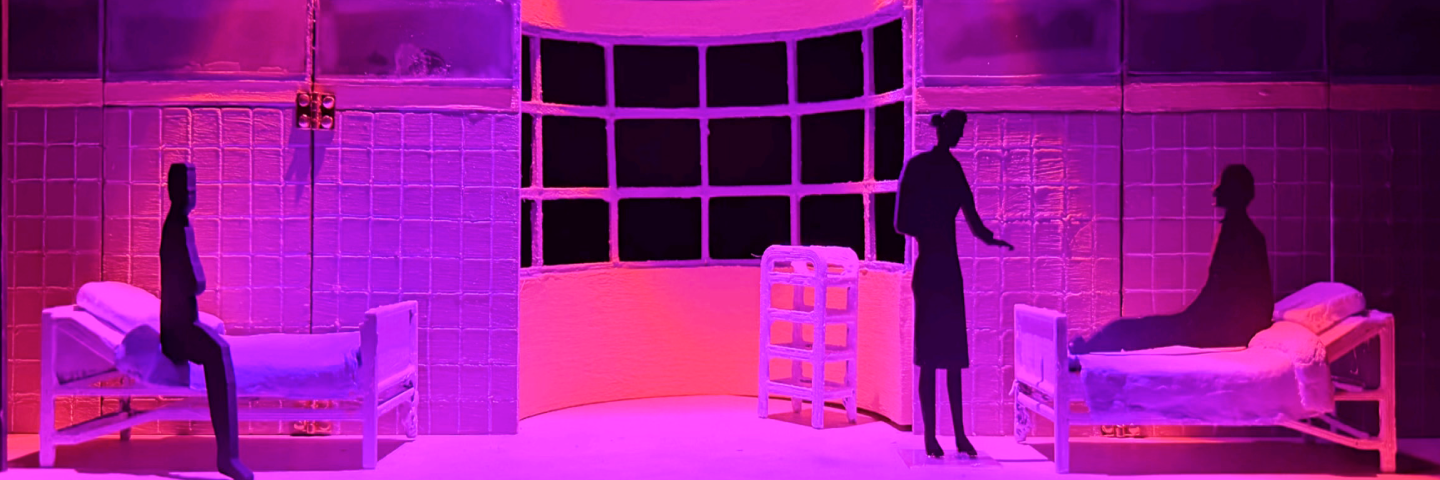
In the Specialization in Stage Design, you will learn to transform dramatic texts into visual and emotional worlds by applying conceptual tools and techniques for designing theatrical and opera sets. You will develop essential knowledge of stage design: from the analysis and interpretation of texts to the exploration, research, and professional presentation of stage concepts.
- Concept-technical balance: The only postgraduate course that combines the European conceptual vision with American technical rigor for a comprehensive training that unites artistic interpretation with constructive aspects.
- Connection with the industry: Experienced teachers and a close link with the industry allow us to offer direct experiences in the professional world.
- AI in the creative process: Integrates AI tools to investigate scenic narratives as a conceptual starting point in design.
- Professional projection: Versatile training that will allow you to design scenographies for cinema, theater, television and audiovisual shows.
Forma parte de nuestra #Comunidad Creativa
Curriculum
Who is it intended for?
- Professionals in art, design, interior architecture, architecture.
- Interest in the design of scenographies and spaces for theatrical, film or multimedia productions.
- Must have basic knowledge of space design, materials and preparation of plans and models.
What will you be able to work on?
- Graduates will be able to design innovative spaces and scenarios for theater, film, television and other audiovisual media.
- They will obtain skills for the application of scenographies in artistic and cultural productions.
- They will have the ability to create visual proposals for theater, dance, film and television projects.
- They may work as stage designers, stage production directors, theater and film design coordinators, stage production consultants or producers of cultural events.

 Edyta Rzewuska
 With a master’s degree in set design from the École Nationale des Arts Décoratifs in Paris, she has worked professionally in Mexico as a set and costume designer on more than 150 productions. She has represented Mexico at major international events, such as the Prague Quadrennial and World Stage Design, and has received awards from WSD, ACPT, and Los Metro. She has collaborated with theater companies in the United States, Canada, Spain, Poland, and France.
 Luis Beltrán del Río | Director
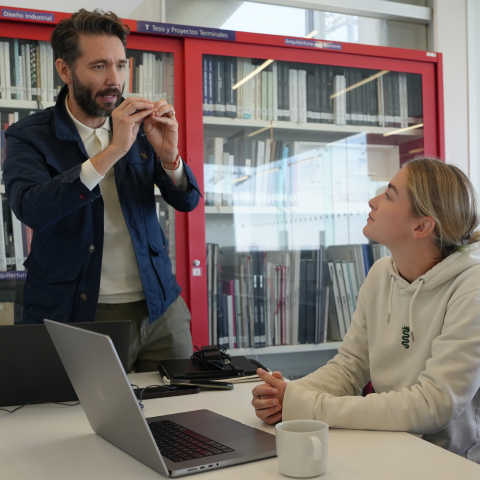
 Architect from UNAM with a Master's degree from the TU Berlin. He directs the Vrtical studio and combines professional practice with teaching. He has won silver medals in Mexican architecture biennials, the Icons of Design Award (2019) and the Architectural League Prize of NY (2020). He has taught at several universities in Mexico and abroad.
Teachers

Mexican set designer and lighting designer. He studied at Ithaca College NY and has worked on a wide range of scenography and lighting projects for theater, performance, television and film, both in Mexico and the United States. Recent projects include the design of the musicals Sugar and Hello Dolly! at the Teatro Insurgentes and the children's ballet La fille mal gardée with the Mexico City Ballet.

A stage designer graduated from INBA's Escuela Nacional de Arte Teatral (ENAT), she works as a lighting, set and production designer in theater, dance, opera and film. She has worked in more than 80 productions in the country's main venues such as the Palacio de Bellas Artes and the Auditorio Nacional, as well as in national and international festivals. He received the Jóvenes Creadores 2009 award, among other prizes.
Frequently Asked Questions
and the admissions process
for international students
Why CENTRO?
- Connection to an international network of experts.
- Program to Promote Excellence: Take courses from other graduate programs at no cost to expand your knowledge in other areas
of interest. - Collaborations with CENTRO's Center for Research on the Creative Economy (CIEC), which disseminates scientific content and publishes the academic journal *Economía Creativa*.
- Professional collaborations with CENTRO Estudio, a program that connects the graduate student community with industry on real-world projects.
Why CENTRO?
- Participation in CENTRO Conecta, a "
" event designed to connect with companies seeking creative talent. - A campus with 17 workshops for industrial design, textiles and fashion, technology, screen printing, and more; 4 screening rooms; 4 computer labs, 1 photography lab, and 1 lighting lab; 2 film and television forums; 13 editing stations; 3 audio booths; 1 ABB robotic arm; 1 Digital Maker Lab; the largest motion capture system in Latin America with 24 infrared cameras; and 1 art gallery.
Why CENTRO?
- Connection to an international network of experts.
- Program to Promote Excellence: Take courses from other graduate programs at no cost to expand your knowledge in other areas of interest.
- Collaborations with CENTRO's Center for Research on the Creative Economy (CIEC), which disseminates scientific content and publishes the academic journal *Economía Creativa*.
- Professional collaborations with CENTRO Estudio, a program that connects the graduate student community with industry on real-world projects.
- Participation in CENTRO Conecta, a networking event with companies seeking creative talent.
- A campus with 17 workshops for industrial design, textiles and fashion, technology, screen printing, and more; 4 screening rooms; 4 computer labs, 1 photography lab, and 1 lighting lab; 2 film and television forums; 13 editing stations; 3 audio booths; 1 ABB robotic arm; 1 Digital Maker Lab; the largest motion capture system in Latin America with 24 infrared cameras; and 1 art gallery.


Frequently Asked Questions
1. Do you offer scholarships and financial aid?
CENTRO Scholarship: You can apply once you have received your admission letter. A socioeconomic assessment (for a fee) is conducted, and an external company evaluates your need for financial aid. Based on that information, the scholarship committee determines the percentage. The decision is final.
CENTRO Alumni Scholarship: 30% for graduates of both undergraduate and graduate programs.
Funding: We work with Laudex to secure funding for the programs. They conduct a risk assessment and determine the percentage of funding to be provided. Laudex Advisor Contact Information: Linda Granados | 55 7672 2250 | linda.granados@laudex.mx
2. Are there any early payment benefits?
Get 10% off your first tuition payment if you enroll by April 20 for the August graduate programs and by October 20 for the January graduate programs.
6% off your first tuition payment or the full semester/quadrimester fee if you enroll by June 15 for the August graduate programs and by December 15 for the January graduate programs.
3. Can I enroll without a bachelor's degree?
It is a mandatory requirement of the SEP to hold a bachelor’s degree in order to enroll in a graduate program. If you are still in the process of obtaining your degree, you may enroll by submitting a certificate from your university stating that you have successfully completed 100% of your course credits and that your degree is in process.
4. Can I earn a degree through a CENTRO graduate program?
Yes, you can do so by submitting a letter from your university stating that you have successfully completed 100% of your bachelor's degree credits and authorizing this degree conferral process.
5. Why do I need to have a good command of English?
6. What are the requirements for enrolling in a graduate program?
To begin the admissions process, you will need: A bachelor’s degree (if you are still working toward your degree, you have the first semester to submit your diploma), a statement of purpose, a completed admission form with your information, a resume, an interview with the program directors for evaluation and acceptance, preferably professional experience, and a good command of English (required for some programs).
Some graduate programs will have specific requirements related to knowledge of software programs or having a portfolio. Your advisor will inform you of these requirements.
To begin the registration process, you must submit the following documents: Letter of Acceptance, Birth Certificate, Bachelor’s Degree Certificate, Bachelor’s Degree Diploma, CURP, and Professional License.
7. What is the admissions process like?
Once you have met all the requirements listed in the previous points, you must undergo an interview with the administration or program coordinators of the program you are interested in. If you are admitted to the program, we will provide you with your acceptance letter, and you can begin the enrollment process by paying the first tuition installment and submitting the required documentation. At this point, you can begin the scholarship application process, if necessary. Once you have completed the admission forms, made the payment, and submitted the required documentation, you will be officially enrolled in the graduate program.
8. What is the admissions process for international students?
You can choose to enroll in the program and earn a degree from CENTRO, or have your studies recognized to obtain a degree from the SEP.
Check out the FAQs for foreigners here
9. Can I take courses from other graduate programs?
CENTRO has developed the "Promoting Excellence" program, which allows graduate students to take courses from other programs to enrich their education at no additional cost.
Specializations: 2 courses per semester/quadrimester (4 in total for the program).
Master's Programs: 2 courses per semester/quadrimester (6 in total for the program).
To be eligible for this benefit, you must meet certain academic prerequisites and have no outstanding financial obligations.
10. What is the difference between a specialization and a master's degree?
A Specialization is a graduate program designed to provide in-depth study in a specific area of knowledge and to develop skills for better job performance. Upon completion, you will receive an academic diploma as a Specialist awarded by the SEP. The average duration is one year.
A master’s degree is the final stage of formal education—a graduate program that provides academic, theoretical, and practical training superior to that of a specialization. It requires analytical and interpretive skills to formulate concepts and develop arguments. Upon completion, you will receive a Master’s degree awarded by the SEP. The average duration is 18 months or between 400 and 500 hours of instruction.